


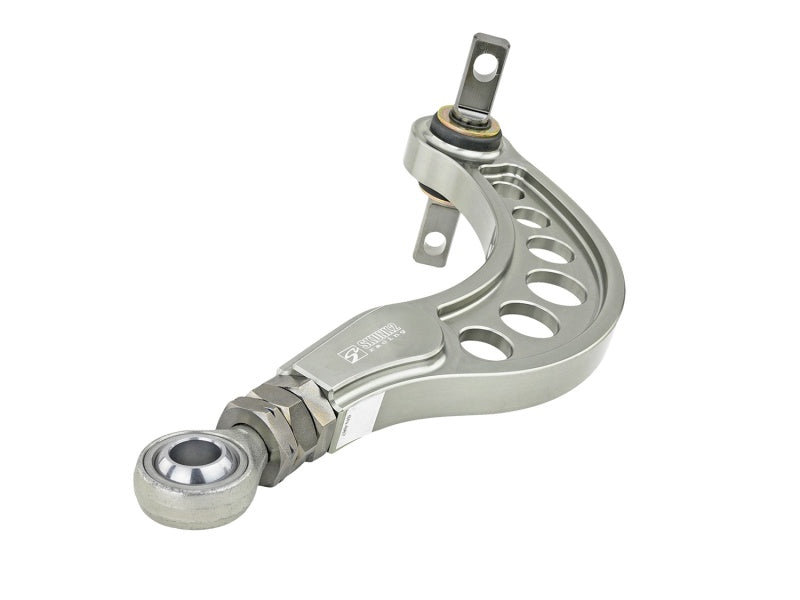
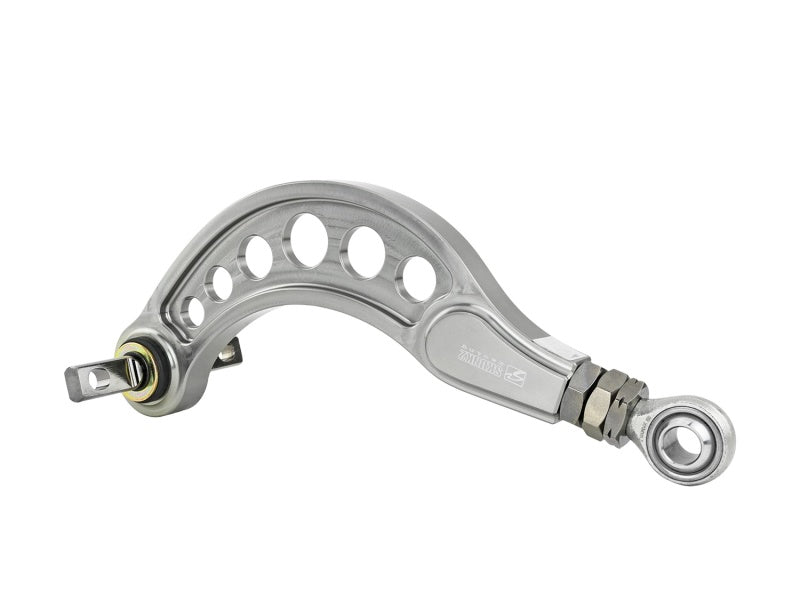
Skunk2 516-05-0660 Hard Anodized Rear Camber Kit 2012-2015 Honda Civic V3 Heim
- Regular price
-
$310.95 - Regular price
-
$350.05 - Sale price
-
$310.95
In Stock: 0
Orders by 1pm PST ship same business day
Free Shipping w/3-4 Day Delivery

Authorized Dealer

Fitment Guarantee

30-Day Hassle Free Returns
Couldn't load pickup availability
Vehicle Fitment
- 2012-2015 Honda Civic LX (FB/FG, 9th generation) - Coupe and Sedan
- 2012-2015 Honda Civic EX (FB/FG, 9th generation) - Coupe and Sedan
- 2012-2015 Honda Civic Si (FB/FG, 9th generation) - Coupe and Sedan
- 2012-2015 Honda Civic Hybrid-L (FB, 9th generation)
- 2013-2015 Honda Civic Natural Gas (FB, 9th generation)
Fitment Notes
- 9th generation Civic only (2012-2015, FB/FG chassis) - the 516-05-0660 is designed for the rear suspension geometry of the 9th gen Civic; it does not fit the 8th generation (2006-2011, FA/FG1) or 10th generation (2016-2021, FC/FK) Civic; verify your model year before ordering
- All trims - the rear suspension geometry is consistent across all 9th gen Civic variants; the kit fits LX, EX, EX-L, HF, DX, Si, Hybrid, Natural Gas, and Touring trims; both Coupe and Sedan body styles are compatible
- Set of 2 - one arm per side, two arms per kit; a complete rear axle installation uses both arms in this set
- Gold anodized version available - the 516-05-0665 is the same V3 arm in a gold anodized finish; both part numbers are mechanically identical and fit the same vehicles
Features
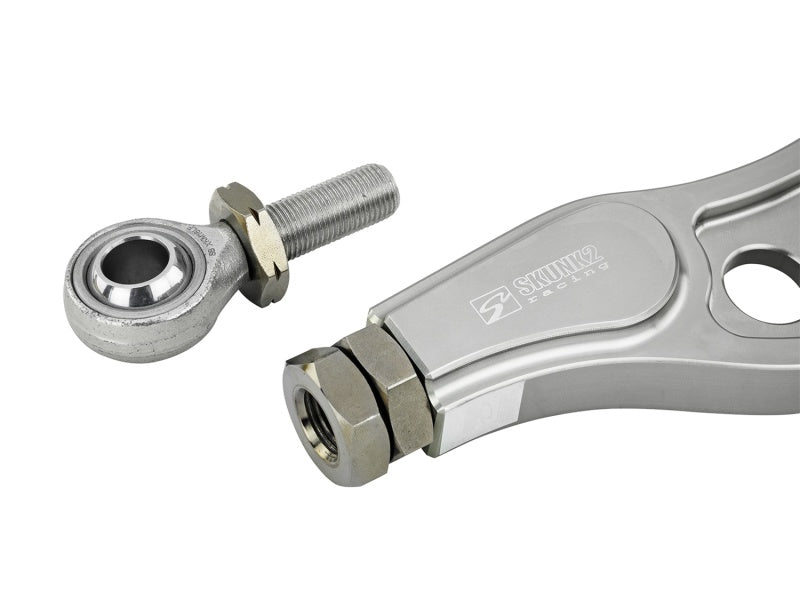
- V3 telescoping opposing-thread adjustment - the defining feature of the 516-05-0660 is Skunk2's V3 (third-generation) adjustment mechanism: the arm body is split into two telescoping sections with opposing (right-hand/left-hand) thread pitches on either end; when the jam nuts are loosened and the center body is rotated, both ends thread simultaneously in opposite directions, extending or shortening the overall arm length and changing the rear camber angle; because the arm length changes while both ends remain connected to the vehicle, no disconnection from the chassis or hub is required to make a camber adjustment; this is the key advantage over older-design camber arms that require the arm to be removed from one mount before length can be changed, which makes on-car adjustment or corner-balance alignment sessions significantly faster
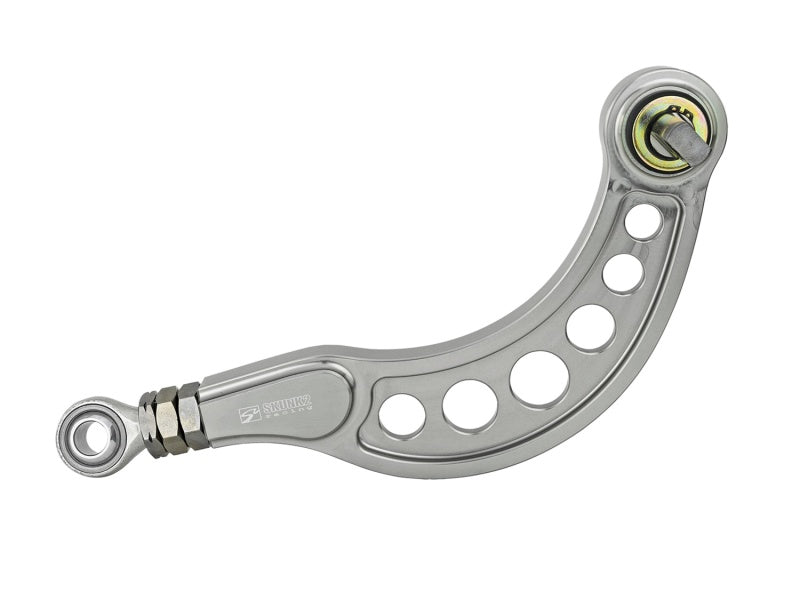
- Spherical heim joint at the wheel hub (trailing arm) mount - the wheel-hub-side mounting point uses a spherical heim (Helm) joint rather than a rubber or polyurethane bushing; a spherical bearing allows free rotation in all axes without compliance - the bearing cannot be deflected laterally or longitudinally under load the way a rubber bushing can; when a suspension link uses a rubber bushing at the hub end, lateral loads under cornering and braking cause the bushing to deflect, changing the actual camber and toe angles during dynamic loading (a condition known as suspension compliance steer); the spherical bearing eliminates this deflection, ensuring the set camber angle is maintained under real cornering loads rather than only at static measurement; this is the same design principle used in race car suspension links, and the source of the "V3 design" designation - prior Skunk2 camber arms used bushings at both ends
- Low-deflection polyurethane bushing at the chassis mount - the inboard (chassis-side) mount uses a polyurethane bushing rather than a spherical bearing; this is intentional: a fully spherical joint at both ends of a suspension link introduces NVH (noise, vibration, harshness) from metal-to-metal contact and provides no isolation from road noise or shock; the polyurethane bushing at the chassis end provides a small but meaningful amount of vibration isolation from the chassis mount while still being significantly stiffer than the OEM rubber bushing it replaces; the combination of spherical bearing at the wheel end and polyurethane bushing at the chassis end is optimized for street and track performance use - maximizing suspension geometry precision at the dynamic wheel-contact end while retaining acceptable NVH characteristics through the chassis-side mount
- CNC-machined aircraft-grade 6061 aluminum construction - the arm body is CNC-machined from 6061-T6 aluminum, the standard aerospace structural alloy for high-strength-to-weight applications; CNC machining produces the precise thread dimensions required for the opposing-thread adjustment mechanism to function without play or binding, and the precise bore dimensions required for the heim joint and bushing press-fit interfaces; the aluminum construction reduces unsprung weight relative to steel arms
- Hard anodized finish - the arms are hard anodized rather than standard anodized or painted; hard anodizing (Type III anodizing) builds a thicker, denser aluminum oxide layer on the surface than standard Type II anodizing, with significantly higher surface hardness (typically 60-70 Rockwell C equivalent) and improved abrasion and corrosion resistance; hard anodizing is the standard surface treatment for aluminum suspension components exposed to road grit, salt, moisture, and mechanical wear at joint interfaces
- Race-proven camber kit technology - Skunk2 has supplied rear camber kits to Honda's factory road race vehicles and to professional race teams since 1997; the V3 telescoping design used in the 516-05-0660 is derived from the same adjustment architecture Skunk2 uses on its own race cars; the 9th gen Civic kit applies this technology to a direct-fit street application
- Corrects lowering-induced camber gain - the 9th gen Civic's rear multi-link suspension introduces negative camber as ride height is lowered; at stock ride height this is minimal, but with 1-2 inches of lowering (typical with coilovers or lowering springs) the rear camber can reach -2.5° to -3.5° beyond the factory specification; this level of negative camber causes accelerated inner tire wear, reduces straight-line traction on acceleration, and changes the vehicle's corner entry and exit balance; the 516-05-0660 provides approximately 4 degrees of total adjustment range, sufficient to correct the camber introduced by typical street lowering while retaining the ability to dial in a small amount of negative camber intentionally for improved cornering grip if desired
Specifications
- Part Number: 516-05-0660
- Brand: Skunk2 Racing
- Product: Hard Anodized Rear Camber Kit - V3 Design with Spherical Heim Joint
- Vehicle Application: 2012-2015 Honda Civic (9th gen, FB/FG) - all trims
- Design Version: V3 (telescoping opposing-thread with spherical heim joint at hub mount)
- Material: CNC-machined aircraft-grade 6061 aluminum
- Finish: Hard anodized
- Hub-Side Joint: Spherical heim (Helm) joint
- Chassis-Side Bushing: Low-deflection polyurethane
- Adjustment Range: Approximately 4 degrees total (positive and negative)
- Adjustment Method: Telescoping opposing-thread (no disconnection required)
- Quantity: Set of 2 (both sides included)
- Package Weight: 7 lbs
- Package Dimensions: 15 x 10 x 5 in
- UPC: 873265007377
- Gold Anodized Version: 516-05-0665
Included Components
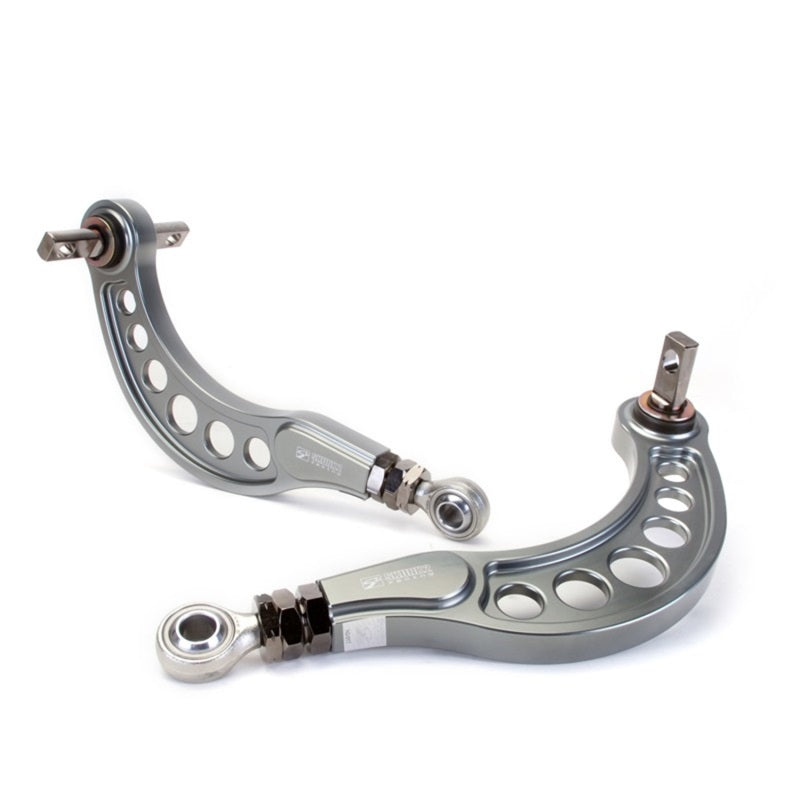
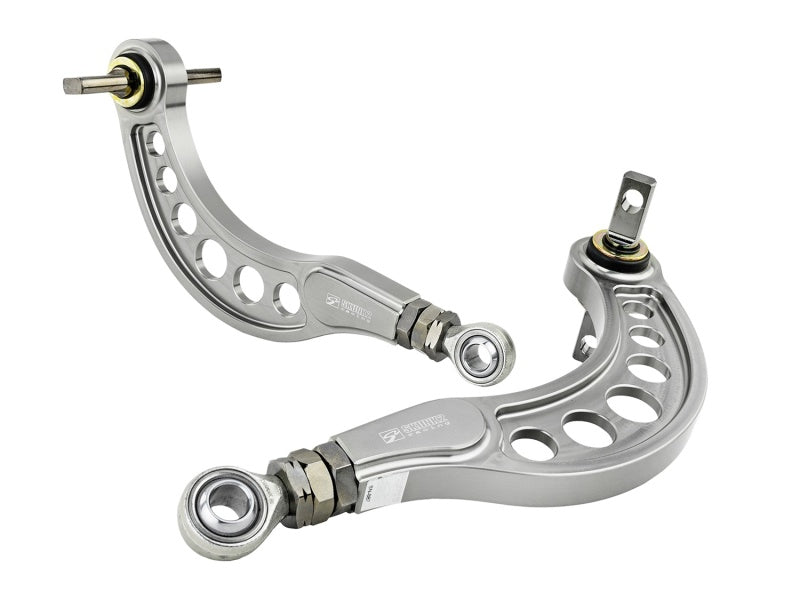
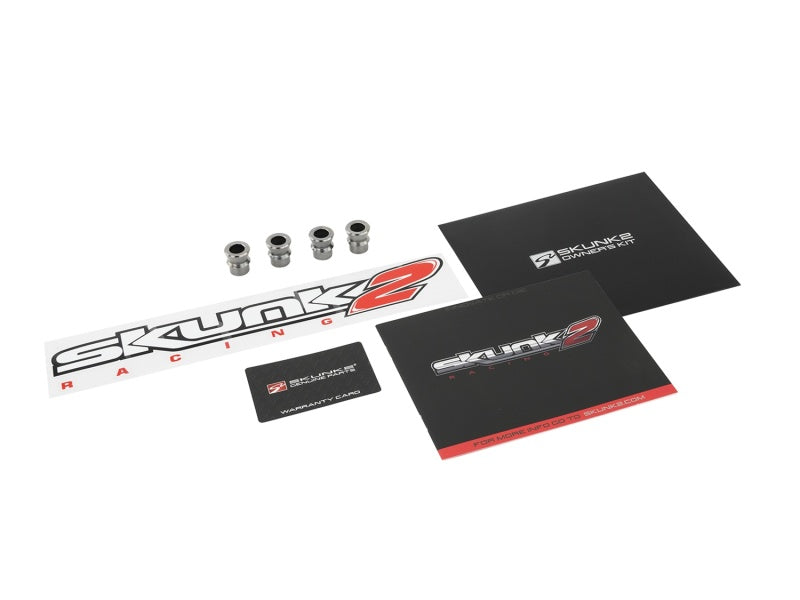
- 2x Rear Camber Arms (left and right) - hard anodized 6061 aluminum with spherical heim joint and polyurethane bushing
- Jam nuts and installation hardware
Product Description
The Skunk2 516-05-0660 is the Hard Anodized V3 Rear Camber Kit for the 2012-2015 Honda Civic (9th generation, all trims). It is the current-generation rear camber arm for the FB/FG Civic, featuring Skunk2's V3 telescoping opposing-thread design with a spherical heim joint at the wheel hub mounting point - the same adjustment architecture Skunk2 has used on its own race cars and Honda factory road race vehicles since the late 1990s, applied to a direct bolt-in street application for the 9th gen Civic platform.
The V3 design solves two problems simultaneously. The telescoping opposing-thread body allows camber adjustments to be made by loosening the jam nuts and twisting the arm - no jack stands, no disconnecting the arm from the chassis, no re-torquing of hub bolts mid-adjustment. The spherical heim joint at the hub end eliminates the compliance deflection inherent in rubber or polyurethane bushings at that location: under lateral cornering loads, a bushing-equipped arm flexes, changing the actual camber angle during dynamic loading and introducing unpredictable handling variations; the heim joint holds the geometry precisely regardless of load direction. The chassis-side polyurethane bushing retains a degree of NVH isolation appropriate for a street-driven vehicle.
The approximately 4 degrees of total adjustment range is sufficient to correct the negative camber gain introduced by 1-2 inches of ride height reduction with lowering springs or coilovers, and to set a small intentional negative camber angle for improved cornering grip. Arms are CNC-machined from aircraft-grade 6061 aluminum, hard anodized for durability. Set of 2. The gold anodized version is 516-05-0665.
You may also like
-
aFe Power 50-70063D Momentum HD Cold Air Intake for 15-23 Toyota Hilux/Fortu
 aFe Power 50-70063D Momentum HD Cold Air Intake for 15-23 Toyota Hilux/Fortu
- Regular price
-
$385.95 - Regular price
-
- Sale price
-
$385.95
-
AEM 21-721C Cold Air Intake for 2011-2013 Mini Cooper S/John Cooper Works 1.6L
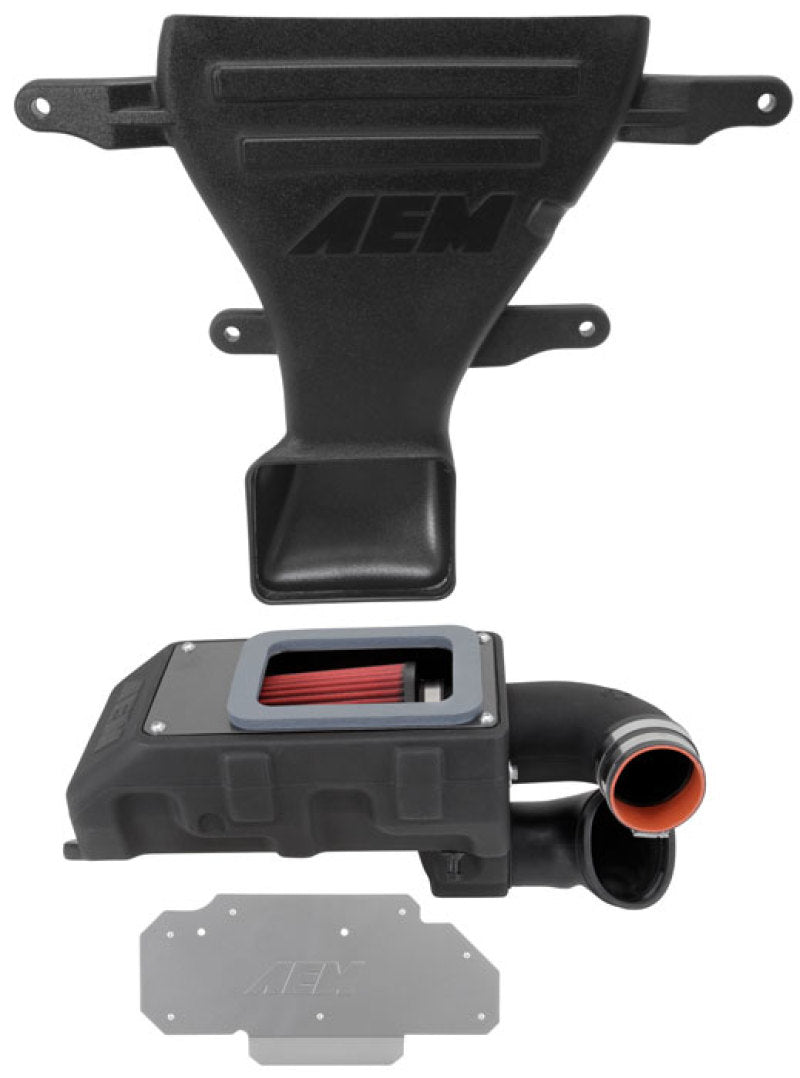 AEM 21-721C Cold Air Intake for 2011-2013 Mini Cooper S/John Cooper Works 1.6L
- Regular price
-
$629.99 - Regular price
-
- Sale price
-
$629.99
-
aFe 59-20003 Turbo Inlet Pipe for 2017-2020 Ford Raptor 3.5L EcoBoost
 aFe 59-20003 Turbo Inlet Pipe for 2017-2020 Ford Raptor 3.5L EcoBoost
- Regular price
-
$374.95 - Regular price
-
- Sale price
-
$374.95
-
Injen IS1341BLK Black Short Ram Intake for 2013-17 Hyundai Veloster Turbo 1.6L
 Injen IS1341BLK Black Short Ram Intake for 2013-17 Hyundai Veloster Turbo 1.6L
- Regular price
-
$348.93 - Regular price
-
$331.49 - Sale price
-
$348.93
-
aFe Power 56-70038R Takeda Momentum Cold Air Intake for 2018-25 Kia Stinger
 aFe Power 56-70038R Takeda Momentum Cold Air Intake for 2018-25 Kia Stinger
- Regular price
-
$443.95 - Regular price
-
- Sale price
-
$443.95
-
Injen PF9032RB PowerFlow Cold Air Intake Black for 15-26 Ford F-150/Raptor
 Injen PF9032RB PowerFlow Cold Air Intake Black for 15-26 Ford F-150/Raptor
- Regular price
-
$568.08 - Regular price
-
$539.68 - Sale price
-
$568.08
-
K&N Cabin Filter Cleaning Kit
 K&N Cabin Filter Cleaning Kit
- Regular price
-
$32.95 - Regular price
-
- Sale price
-
$32.95
-
K&N 69-9900TS Typhoon Cold Air Intake 17-22 Alfa Romeo Giulia/Stelvio 2.0L Turbo
 K&N 69-9900TS Typhoon Cold Air Intake 17-22 Alfa Romeo Giulia/Stelvio 2.0L Turbo
- Regular price
-
$419.99 - Regular price
-
- Sale price
-
$419.99
-
K&N 50-2617 NextGen Cold Air Intake System for 21-25 Ford F-150/Raptor 2.7L/3.5L
 K&N 50-2617 NextGen Cold Air Intake System for 21-25 Ford F-150/Raptor 2.7L/3.5L
- Regular price
-
$425.99 - Regular price
-
- Sale price
-
$425.99
-
AEM 21-699C Cold Air Intake Kit for 07-10 MINI Cooper S/JCW 1.6T N14 R55/R56/R57
 AEM 21-699C Cold Air Intake Kit for 07-10 MINI Cooper S/JCW 1.6T N14 R55/R56/R57
- Regular price
-
$629.99 - Regular price
-
- Sale price
-
$629.99


